SMAE Tracker
A nutrition tracking platform built around the Mexican Food Exchange System (SMAE), helping users follow structured dietary plans without relying exclusively on calorie counting.
The Problem
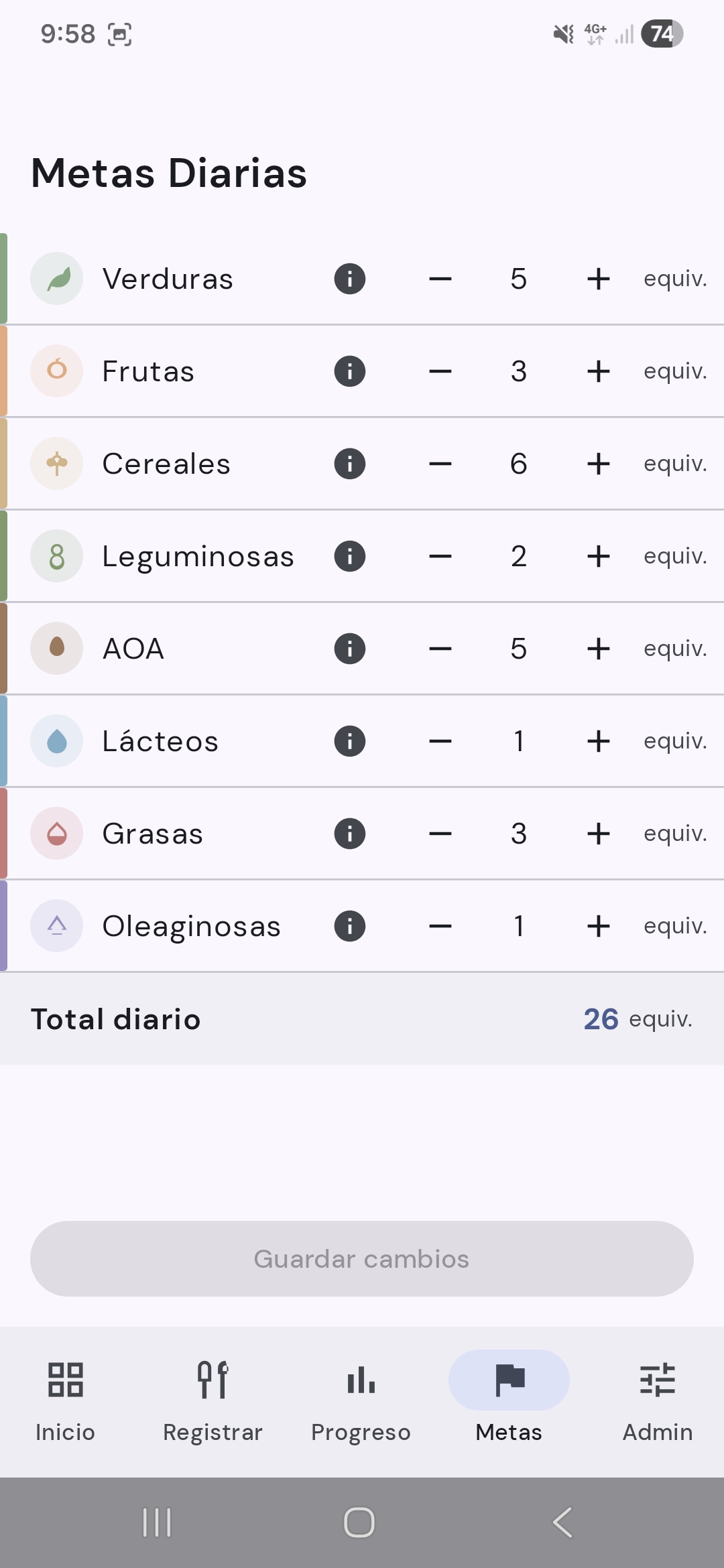
Many nutrition tracking applications are built around a single paradigm: calorie and macro counting. But many nutritionists in Mexico prescribe diets using the Sistema Mexicano de Alimentos Equivalentes (SMAE) — an exchange-based system where foods are grouped into categories, and a diet is defined by how many exchanges from each group a patient may consume per day.
Patients following SMAE-based plans routinely struggle with:
- Understanding what an exchange is and how it relates to actual food.
- Translating a written meal plan into daily decisions at the grocery store or kitchen.
- Tracking how many exchanges they have consumed — without a tool designed for this.
- Finding valid food substitutions when a specific item isn't available.
Existing apps either ignore the SMAE system entirely or require users to manually calculate exchanges — creating friction that reduces dietary adherence.
Product Vision
The vision is to make exchange-based diets as simple and intuitive to follow as calorie-based applications — without requiring users to understand the nutritional methodology behind them.
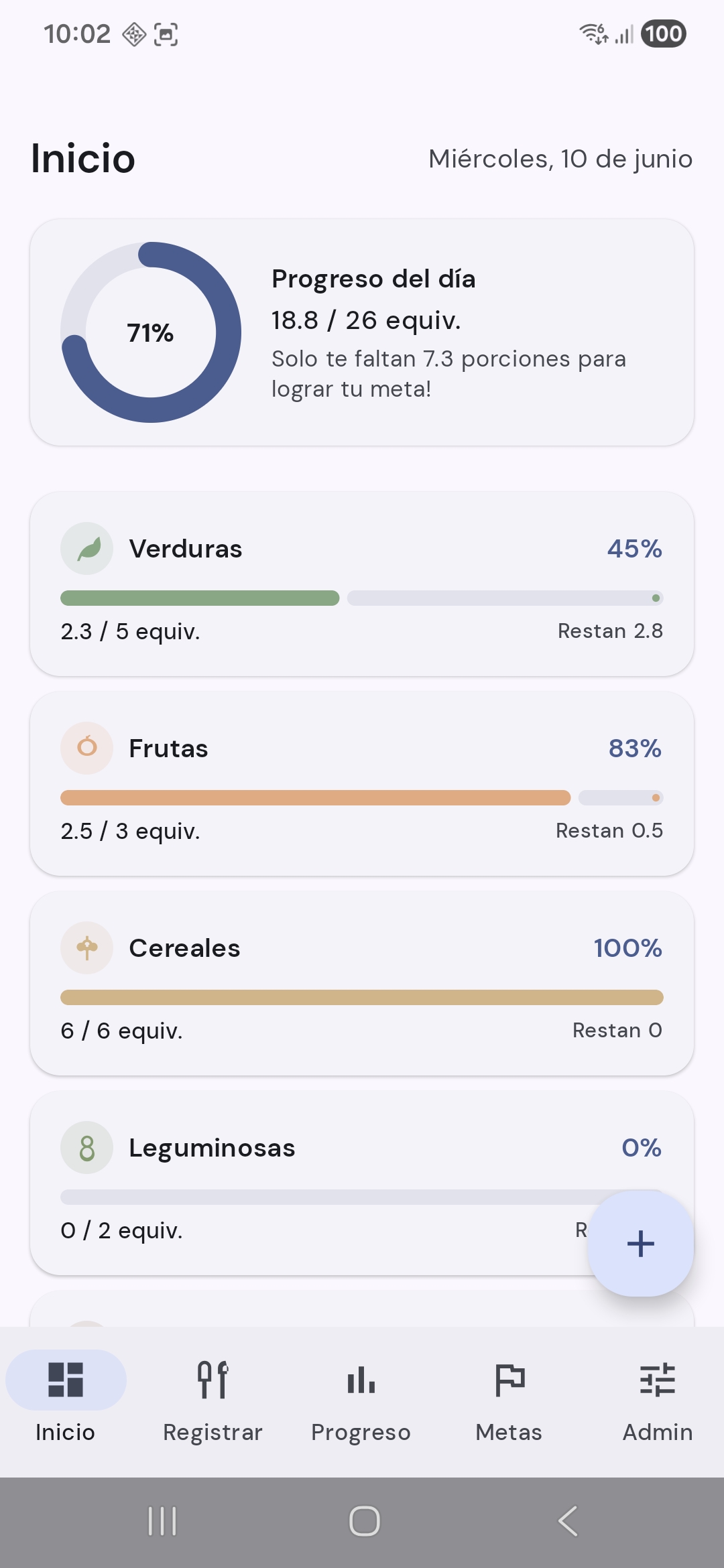
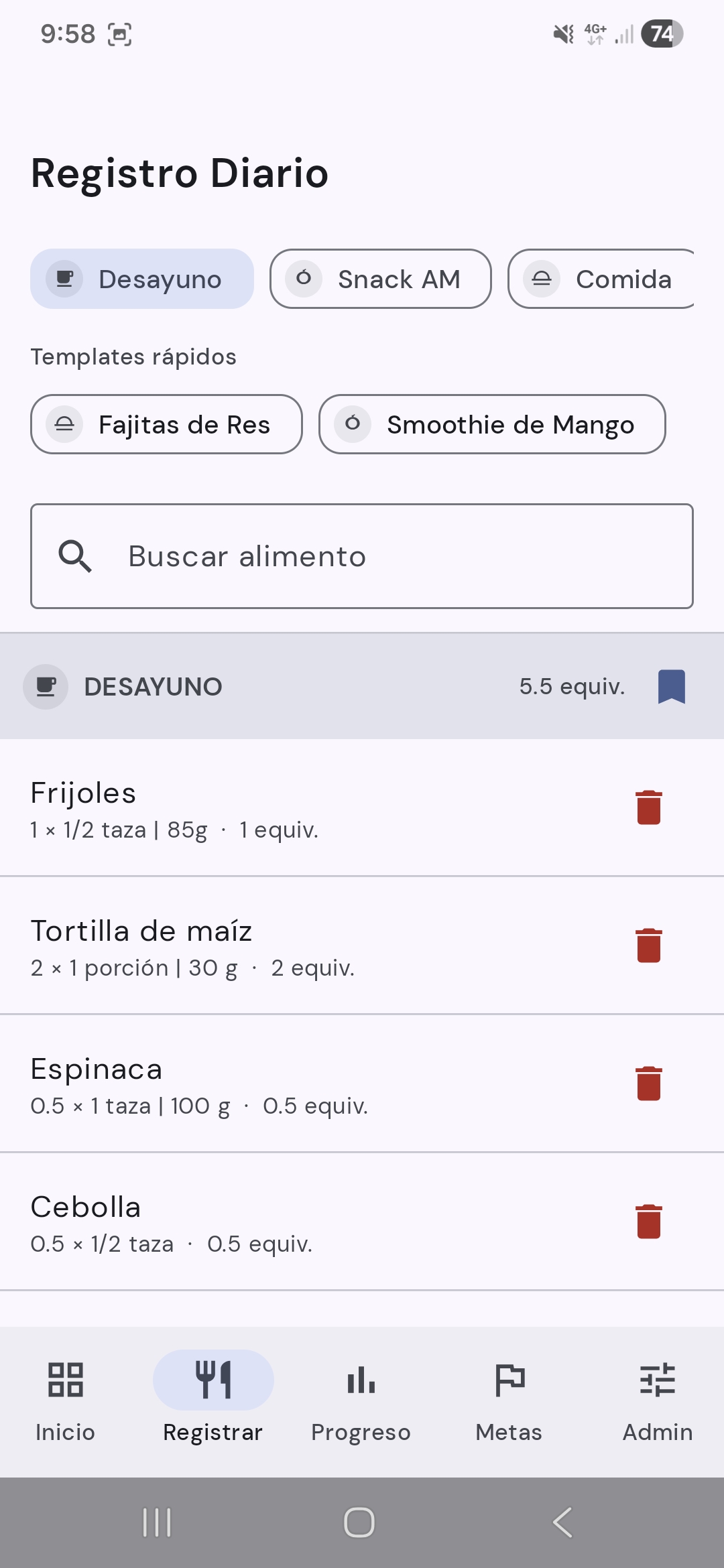
A patient should be able to look up any food, see its exchange value, add it to a meal, and know at a glance how many exchanges remain in their daily plan — with no manual calculation required.
Users should be able to build meals, track exchanges, discover food substitutions, understand nutritional balance, and follow professional nutrition plans — all within a single product designed for the way Mexican nutritionists actually work.
Domain Model
Translating the SMAE methodology into a software domain model was one of the most challenging and rewarding aspects of the project. Nutrition guides are written for clinicians — not for software systems — so the domain required careful interpretation and formalization.
The model captures the relationships between individual foods, their standardized portions, the exchange values those portions represent, the food group each exchange belongs to, how exchanges combine into meals, and how meals compose a structured daily plan — all while preserving consistency with official SMAE guidelines.
Food Database
The food database is the foundation of the entire platform. Without an accurate, well-structured food catalog, exchange calculations and substitution recommendations are unreliable.
Standardized Portions
Each food entry defines canonical serving sizes aligned with SMAE guidelines, ensuring exchange calculations are consistent regardless of how the food is described by the user.
Exchange Values
Every portion maps to an explicit exchange value within its food group, enabling the app to automatically compute exchange totals as users build meals.
Food Group Classification
Foods are classified into SMAE exchange categories — cereals, legumes, proteins, fats, fruits, vegetables, dairy, and sugars — which drives both tracking logic and substitution recommendations.
Search Metadata
Entries include aliases, common names, and regional variants so users can find foods using everyday language rather than technical nutritional terminology.
Product Challenges
Converting a Clinical Methodology into Software
The SMAE system is defined in nutrition guides written for dietitians and clinicians. The documents describe exchange categories, portion equivalences, and food group rules in natural language — with no formal data model behind them.
Formalized the SMAE methodology into an explicit domain model with clear entity relationships, exchange rules, and group hierarchies — treating the nutrition guide as a domain specification rather than reference material.
Food Standardization at Scale
The same food can appear in different preparations, portion descriptions, and regional names. Without standardization, the exchange database becomes inconsistent and user trust erodes quickly when calulations don't match their nutritionist's expectations.
Designed a normalized food catalog where each entry has a canonical portion and exchange value anchored to the SMAE reference tables, with aliasing for regional and common-language variants.
Designing for Non-Technical Users
Exchange-based diets are inherently abstract. Presenting exchange counts, group budgets, and substitution logic to patients who may never have encountered this system before requires careful UX design — the system must be invisible.
Designed interfaces around user goals — "add food to meal," "see what I have left today" — rather than around the underlying exchange model, letting the domain logic run silently in the background.
Key Features
System Architecture
The platform is structured around a data pipeline that moves from a curated food database through business logic layers to user-facing tracking and analytics.
Screenshots
Future Roadmap
The current focus is on core exchange tracking and meal planning. Planned enhancements extend the platform toward professional and AI-assisted use cases.
Impact & Outcomes
SMAE Tracker aims to reduce the complexity of following exchange-based diets by transforming a clinical nutrition methodology into an intuitive digital product.
By eliminating manual exchange calculation, the platform reduces the daily cognitive load for patients — turning a complex diet protocol into a simple daily checklist.
The platform is designed to help users improve dietary adherence, reduce meal-planning friction, understand valid food substitutions, and follow nutritionist recommendations more consistently — without requiring nutrition expertise.